

Little Space – Its Meaning, Origin and Usage
“Little Space” taps into that nostalgic desire, offering a sanctuary where adult responsibilities fade away. This intriguing phenomenon is gaining popularity among adults seeking an escape from everyday pressures. We will uncover what it truly means, its historical context, and its relevance in modern society. You’ll come away with insights into how this practice can foster a sense of joy and relaxation.
The Meaning of “Little Space
“Little Space” transcends typical definitions, embodying a unique blend of vulnerability and safety that allows individuals to explore their childlike instincts in a controlled environment. For many, it’s a form of escapism, where the burdens of adulthood are temporarily lifted, paving the way for playful self-expression. This space isn’t merely about age regression; it’s about immersing oneself in a world of imagination, where worries fade and joy reigns.
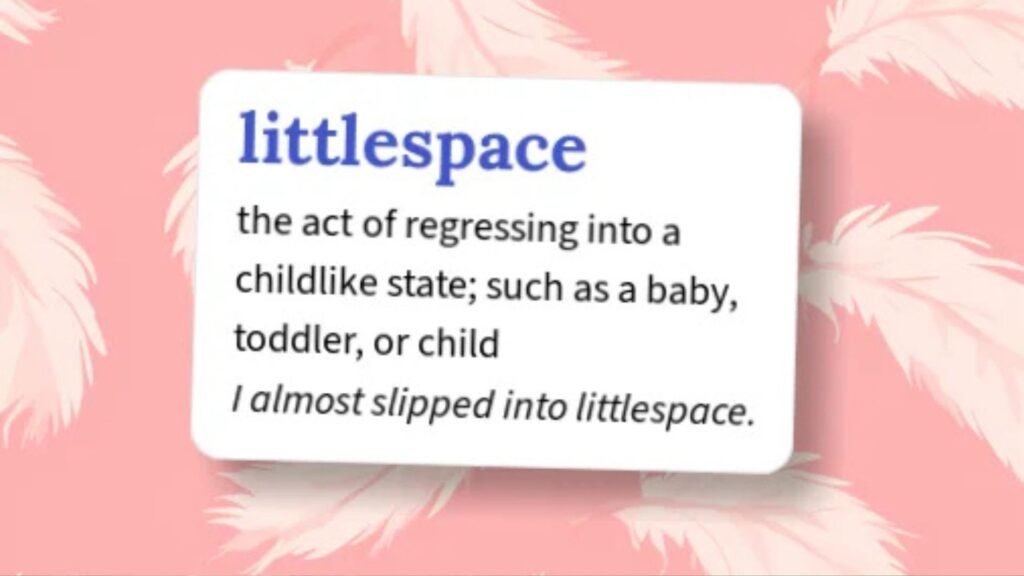
Engaging often fuels personal growth, inviting participants to confront deeper emotional needs. By reconnecting with earlier, simpler joys, adults can revisit feelings of innocence and spontaneity that everyday life tends to stifle. “Little Space” serves as a vital sanctuary for emotional healing and authenticity in a fast-paced world.
You May Be Interested In: Fishing In The Dark Meaning, Origin, & Usage
Examples
It often manifests in the simplest of activities that transport individuals into a sensation of comfort and safety. For many, this might involve curling up in a cozy blanket fort made of pillows and fairy lights, others might find their little space in the meditative ritual of coloring books. Even mundane tasks can transform into moments of bliss when approached with a playful mindset.
Physical Small Spaces: Tiny homes, cozy nooks, or compact living spaces.
Psychological Little Space: A mental state where someone regresses into a childlike mindset, often seen in age regression communities.
Design Concepts: Small-space interior design or organization ideas.
Music or Literature: A song, book, or creative work with “Little Space” in the title.
Other Ways to Say
Exploring alternative phrases can add nuance to your conversations and writing. These expressions invite imagery of cherished retreats where one can find solace or creativity, transforming the notion of limited space into a haven of possibility. Phrases such as “compact enclave” or “petite refuge” suggest a sense of exclusivity and tranquility.
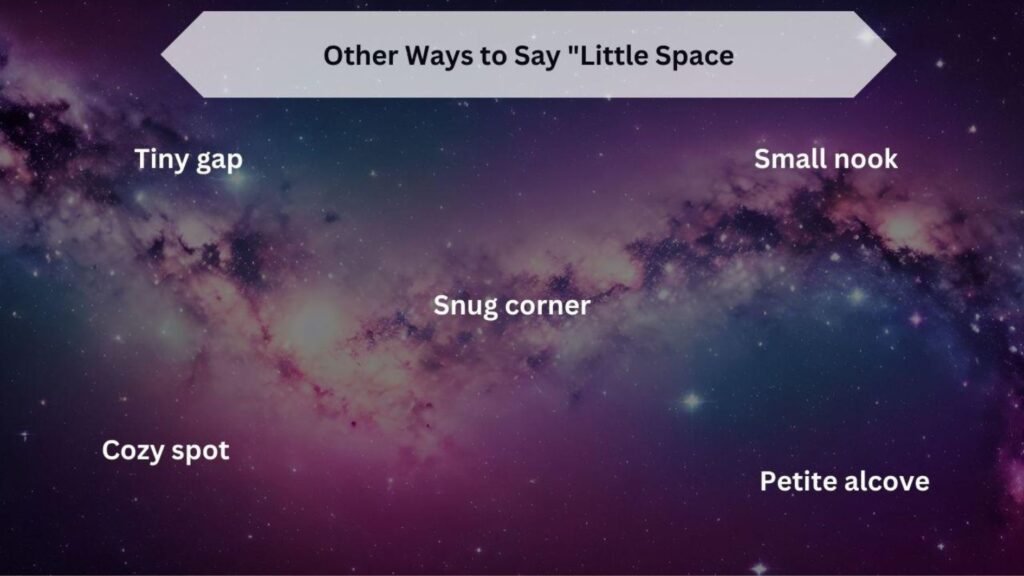
Embracing variations like “snug sanctuary” heightens the emotional resonance, tapping into the idea that even the smallest of spaces can foster connection, reflection, and inspiration.
- Tiny gap
- Small nook
- Snug corner
- Cozy spot
- Petite alcove
- Narrow opening
- Compact area
- Pocket of room
- Miniature zone
- Tight squeeze
- Modest section
- Cramped spot
- Slight recess
- Limited space
- Petite chamber
- Minor opening
- Pinch of room
- Snug hideaway
- Restricted gap
- Tiny compartment
- Minute passage
- Subtle pocket
- Modest enclosure
- Trimmed section
- Scaled-down space
- Petite zone
- Narrow passageway
- Squeezed-in area
- Limited nook
- Close quarters
They create a mental picture of a secluded area that, despite its size, holds great significance. Such alternatives remind us that in a world often glorifying expansive horizons, sometimes it’s the intimate settings that truly nourish our souls.
Origins
The term finds its roots in the broader landscape of age regression, where individuals revert to a childlike state for comfort and emotional relief. This concept has blossomed within online communities, particularly among those exploring age-regressive practices in a consensual manner.
Historically, the idea of regressing to a childlike mindset isn’t new. It draws parallels to therapies like play therapy, where adults engage in playful activities to reconnect with their inner child. However, the modern interpretation embraces a more nuanced understanding of identity and expression, infusing it with elements of community support, creativity, and personalization.
As this term continues to evolve, it challenges conventional notions of adulthood, sparking conversations about emotional wellness and the importance of nurturing one’s inner child. “Little Space” serves as a pivotal reminder to cherish moments of simplicity and light-heartedness amidst the complexities of everyday life.
Conclusion
It represents a compelling approach to creating a haven for self-reflection and connection. With roots in various traditions and a modern resurgence, it serves as a reminder of the importance of personal space in our chaotic lives. The ability to define and utilize Little Space varies among individuals, but its underlying principles remain invaluable in today’s fast-paced world.
FAQs
Who Typically Uses Such Term?
Little Space is commonly used by those in the age regression community, including people who identify as DDLG (Daddy Dom/Little Girl) or ABDL (Adult Baby/Diaper Lover).
How Can One Enter Little Space?
Entering Little Space can involve engaging in activities that evoke childhood feelings, such as coloring, playing with toys, or listening to calming music.
Is Little Space The Same As Age Regression?
While related, Little Space is a specific emotional state or experience within the broader context of age regression, which can also include physical behaviors.